
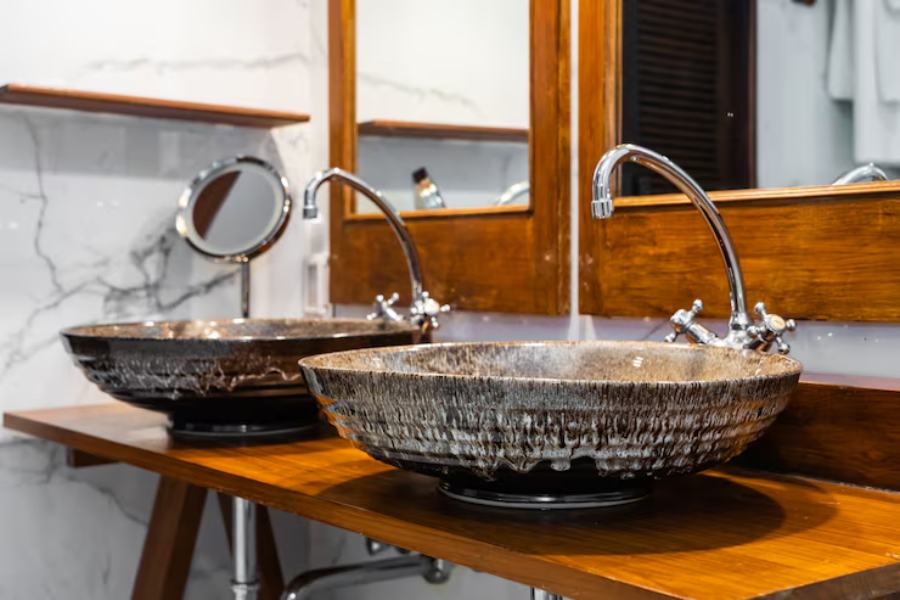
When shopping for a bathroom vanity, one of the first material choices you’ll encounter is real wood vs. MDF. At first glance, the difference may seem subtle—especially when both options look stylish in product photos. But once you factor in durability, moisture resistance, long-term value, and everyday use in an American household, the choice becomes much clearer.
Maybe you are shopping around for a real wood bath vanity and want to know the absolute truth about whether it is really superior to MDF units. Then this guide will tell you everything you need to know, without the marketing claptrap.
1. Comprehending the Two Materials
It is worth knowing what you are buying before deciding which of the two varieties is better.
2. What Is a Real Wood Bath Vanity?
The wood bath vanity is made of solid hardwood, such as oak, rubberwood, birch, or poplar. These woods are made from natural timber and retain their natural grain structure.
Key characteristics:
- Grain and texture of natural wood.
- High structural integrity.
- Sands, repairs, and finishes are possible.
- Usually heavier and stronger.
Real wood vanities are standard in mid-range to high-end bathroom remodels across the U.S. and are popular in residences where durability and resale value are essential.
3. What Is MDF (Medium-Density Fiberboard)?
MDF is a composite wood material that is produced by crushing wood fibers, resin, and wax. It is commonly applied to mass-produced furniture.
Key characteristics:
- Even, smooth finish (painted finishes are much easier to apply on smooth surfaces)
- Lower cost
- Lightweight
- Exposes to moisture damage when unsealed.
Although MDF may appear nice at the time of installation, it performs poorly in damp conditions, such as in the bathroom.
4. Wetness Protection: The Bathroom Reality Check
Bathrooms are places of high humidity. Shower steam, sink splashing, and changing temperatures all damage cabinetry.
5. Actual Wood in Humid Conditions
Despite popular misconceptions, solid wood can be used very well in the bathroom when it is well sealed and finished.
- It is possible to predict natural expansion and contraction.
- The sealants are high-quality and prevent moisture intrusion.
- Minor water exposure does not cause direct harm to the structure.
A real wood vanity may last for decades if moisture is adequately controlled and ventilation is adequate (as is the case in most homes in the United States).
6. MDF and Moisture: One of the Known Weaknesses
Exposure to water is the most significant disadvantage of MDF.
- Soaks up easily if the surface is compromised.
- Blisters, bubbles, and lose integrity.
- Impossible to restore after the water damage.
In practice, a dripping tap, condensation, or other minor plumbing problem can permanently damage an MDF vanity in a few months.
Conclusion: Real wood, in terms of moisture resistance and longevity, is obviously better than MDF in the case of bathrooms.
7. Durability and Structural Strength
7.1 Why Real Wood Lasts Longer
Solid wood naturally is strong and load-bearing.
- Bears dense stone or quartz countertops.
- Creeps unwinds screws and hinges.
- Sturdy enough not to sink under the weight of sinks.
This is what makes real wood vanities the best to be used in:
- Double-sink setups
- Large countertop surfaces
- Every day use in the domestic setting
7.2 MDF: Fine Light, Limited Longevity
MDF lacks an internal grain structure, which limits its strength.
- Screws can loosen over time
- Drawer slides and hinges can break earlier
- Corners and edges are likely to be damaged
MDF can be used in guest bathrooms or provisional installations, but in primary bathrooms, it becomes a significant issue.
8. Aesthetics: Different by Nature vs. Standardized Uniformity
8.1 The Classic Attractiveness of Real Wood
All the real-wood bath vanities are one-of-a-kind.
- Natural grain patterns
- Warm, organic appearance
- Ages gracefully over time
Real wood has remained one of the leading options for adding authenticity and value to American home design trends, particularly the farmhouse, transitional, and modern organic styles.
8.2 MDF: Consistent but Flat
MDF offers a smooth paint finish but is characterless.
- No visible grain
- Appears the same across departments
- May be artificial or empty
Although MDF is effective in ultra-modern designs that rely solely on paint, it lacks the depth and richness of solid wood.
9. Serviceability and Durability
9.1 Real Wood Is Forgiving
Among the most significant advantages of real wood that are often easily disregarded is that it can be repaired and refinished.
- Scratches can be sanded out.
- Dents can be filled
- A refreshing finish may be done years later.
This makes real wood vanities a good long-term investment, particularly for homeowners who expect to remain in their homes.
9.2 MDF Compared to Disposable
Once MDF is damaged:
- Swelling is irreversible
- Surface peeling is not fixable
- The only option is replacement
In most instances, a failed MDF vanity goes to waste and is deposited in a landfill, contributing to long-term expenses and waste.
10. Price: Initial Price vs. Lifetime Value
10.1 Is Real Wood More Expensive?
Yes—initially.
However, when you consider:
- Longer lifespan
- Fewer replacements
- Higher resale value
The overall cost of ownership tends to favor real wood.
10.2 MDF Appears Cheaper, But…
MDF vanities are also valuable for those who can afford them, despite their low cost, though regular replacement can easily erode initial savings.
Think of it this way:
- One actual wood vanity, 15–20 years old.
- Or two or three MDF vanities within the same time.
11. Ecological and Health-Related Concerns
11.1 Real Wood: More Natural
- Green material, sourced responsibly
- Fewer synthetic binders
- Reduce VOC emissions when properly completed
Healthy indoor air quality is now a top consideration by many homeowners in the U.S., particularly in closed spaces such as bathrooms.
11.2 MDF and Chemical Concerns
MDF often contains:
- Formaldehyde-based resins
- Increased VOCs emissions (particularly in low-cost units)
Although regulations have been strengthened, real wood remains the healthier choice for health-conscious households.
12. Which One Is Right for You?
12.1 Select a Real Wood Bath Vanity If You:
- Want long-term durability
- Stay in a humid place
- Beauty in nature and resale value
- Optimize sustainable furniture that can be repaired
12.2 Choose MDF If You:
- Need the lowest upfront cost
- Furnishing a guest/rental bathroom
- Enhance a pure, smooth painted appearance
- Expect light, short-term use
13. Conclusion: Which Bath Vanity Is Superior, a Real Wood One or an MDF Unit?
The majority of American homeowners would say yes.
A wood bath vanity will provide:
- Superior durability
- Better moisture resistance
- Timeless aesthetics
- Higher long-term value
MDF units can function in some cases, but they cannot work as effectively because they cannot match the functions, character, and durability of solid wood, particularly in a harsh environment like a bathroom.
When it comes to investing in a room that you spend most of your time in, real wood is not only a style option but also a functional one.
The selection of an appropriate vanity depends not only on appearance but also on your bathroom’s long-term functionality. Real wood can withstand the test of time when quality is considered.