
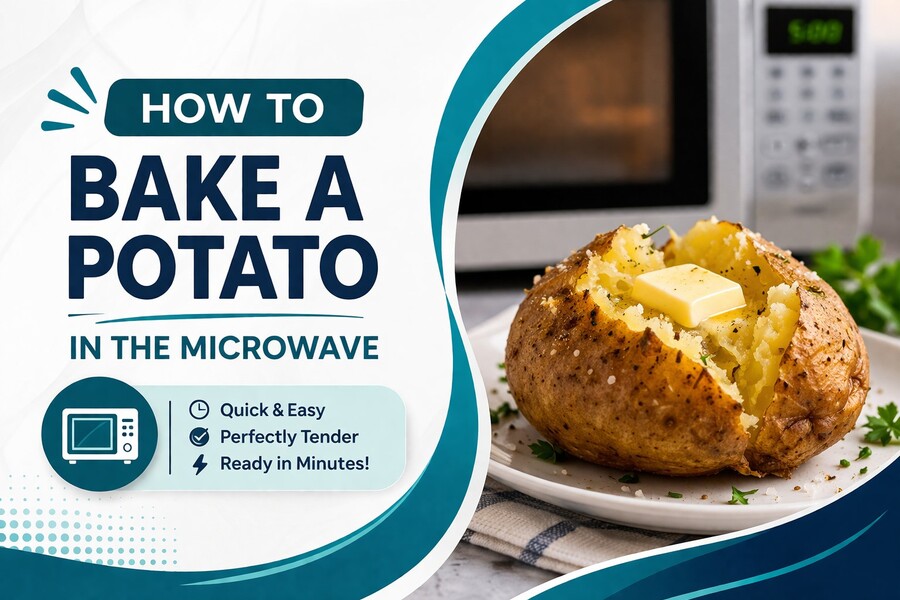
Baking a potato in the microwave is one of the fastest and most practical cooking skills you can master. When you know how to bake a potato in the microwave the right way, you save time, reduce energy use, and still enjoy a soft, fluffy interior that feels comforting and satisfying. This method is ideal when you want a quick meal, a reliable side dish, or a base for endless toppings without turning on the oven.
You are not sacrificing quality for speed. You are simply using steam and heat efficiently. With proper preparation, timing, and technique, a microwave baked potato can be consistent, flavorful, and dependable. This guide walks you through every detail so you understand not just what to do, but why each step matters.
By the end, you will know exactly how to bake a potato in the microwave with confidence, precision, and repeatable results.
Why Baking a Potato in the Microwave Works
Microwaves cook food by exciting water molecules inside the potato. As those molecules heat up, steam forms and cooks the potato from the inside out. This is why microwave baking is so fast compared to oven baking, which relies on dry external heat.
When you bake a potato in the microwave, the interior cooks evenly and becomes tender without drying out. The process is closer to steaming than roasting, which explains the fluffy texture you get when done correctly. The skin will not become crisp on its own, but it will soften and remain pleasant to eat if prepared properly.
This method works especially well for starchy potatoes because they hold moisture and break down into a light, airy texture under steam. You also gain more control. You can stop, check, flip, and adjust cooking time in short intervals instead of committing to an hour-long bake.
Understanding this basic principle helps you make better decisions at every stage of cooking, from choosing the potato to knowing when it is fully done.
Choosing the Best Potato for Microwave Baking
The type of potato you choose directly affects the final texture and flavor. Starchy potatoes are the best option when you want a classic baked potato experience. They cook evenly and fluff easily once split open.
Russet potatoes are the most reliable choice. They have thick skins, high starch content, and enough moisture to handle microwave heat without becoming dense. Yukon Gold potatoes also work well if you prefer a slightly creamier interior, though the texture will be less fluffy.
You should avoid waxy potatoes for this method. These potatoes are designed to hold their shape and tend to cook unevenly in the microwave. They can become firm or rubbery instead of soft and airy.
Size also matters. Medium-sized potatoes cook more evenly than very large ones. If you choose a large potato, expect to add extra time and check doneness carefully. Consistency improves when potatoes are similar in size, especially if you cook more than one at a time.
Preparing the Potato the Right Way
Preparation is a small step that makes a big difference. Start by washing the potato thoroughly under running water. The skin holds dirt, and since the potato cooks with the skin on, cleanliness matters.
Dry the potato completely with a towel. Excess surface moisture can interfere with even heating and make the skin soggy. Once dry, pierce the potato several times with a fork. These holes allow steam to escape safely during cooking. Without them, pressure can build and cause the potato to burst.
You may lightly rub the skin with oil and sprinkle salt if you want extra flavor and a softer exterior. This step is optional, but it improves taste and texture. Do not wrap the potato in foil or plastic. The potato must be exposed so steam can escape naturally.
Place the potato on a microwave-safe plate. Make sure it sits flat so it cooks evenly.
Exact Microwave Timing and Power Settings
Timing depends on potato size and microwave strength, but a reliable baseline keeps you on track. Start with one medium potato cooked on full power.
Microwave the potato for four to five minutes. Carefully flip it using a towel or utensil. Then microwave for another three to five minutes. This rotation ensures even cooking and prevents hot spots.
After the initial cycle, test doneness by inserting a knife or fork into the center. It should slide in easily with little resistance. If the center still feels firm, continue cooking in one-minute increments until fully tender.
When cooking multiple potatoes, add extra time gradually rather than all at once. Overcrowding increases cooking time and can lead to uneven results. Always allow the potato to rest for one to two minutes after cooking. Residual heat continues cooking the interior and stabilizes the texture.
How to Tell When the Potato Is Fully Cooked
Knowing when a potato is done prevents undercooking and overcooking. A properly baked microwave potato feels soft when gently squeezed, using a towel to protect your hand. The skin may wrinkle slightly, which is normal.
A knife test gives the most reliable signal. Insert the blade into the thickest part of the potato. If it slides in smoothly without resistance, the potato is done. If you feel firmness in the center, continue cooking briefly.
Avoid cutting the potato open too early. Releasing steam too soon can interrupt the cooking process and result in a dense center. Let the potato rest first, then slice it open lengthwise.
Once opened, the interior should appear fluffy, not wet or gluey. If you notice dense spots, the potato may need another minute of cooking. Short intervals protect the texture and prevent drying.
Fluffing, Seasoning, and Serving Properly
After resting, cut a slit along the top of the potato. Gently push the ends inward to open it up. This breaks apart the interior fibers and creates a light, airy texture.
Season immediately while the potato is hot. Salt absorbs better at this stage and enhances natural flavor. Add butter first so it melts evenly, then layer additional toppings as desired.
You can keep things simple with salt and pepper, or build a full meal with vegetables, sauces, or protein-based toppings. The neutral flavor of a microwave baked potato makes it versatile and adaptable.
Serving immediately preserves texture. If the potato sits too long after opening, steam escapes and the interior can firm up. Eat while hot for the best experience.
Common Mistakes to Avoid
Skipping preparation is the most common mistake. Not washing or piercing the potato increases the risk of uneven cooking or bursting. These steps are essential, not optional.
Overcooking is another frequent issue. Microwaves vary in power, and long cooking times can dry out the potato. Always use short intervals near the end.
Cooking too many potatoes at once leads to uneven heat distribution. If you need multiple potatoes, space them evenly and extend time gradually.
Cutting the potato open immediately after cooking releases steam too fast. Resting is a critical step that finishes cooking the center gently.
Avoid wrapping the potato tightly. Trapped steam creates uneven pressure and compromises texture.
Making the Skin Better Without an Oven
Microwave baking does not naturally crisp the skin, but you can improve it. Lightly oiling the skin before cooking helps keep it tender and flavorful. Salt also enhances texture.
If you want a firmer exterior, extend cooking time slightly at the end while monitoring closely. This dries the skin just enough without harming the interior.
Another option is a short finish using a different heat source, but even without that step, proper preparation produces a skin that is enjoyable to eat.
Understanding expectations is important. The microwave prioritizes speed and moisture. With the right approach, the skin complements the soft interior rather than detracting from it.
Storage, Reheating, and Leftovers
Microwave baked potatoes store well when handled properly. Allow the potato to cool completely before storing. Place it in an airtight container and refrigerate.
Reheat by microwaving on high for one to two minutes, depending on size. Check halfway through and rotate if needed. Avoid overheating, which can toughen the texture.
Do not freeze whole baked potatoes. Freezing alters the internal structure and results in a watery texture when reheated.
Leftover potatoes can be repurposed into other meals, but reheating gently preserves the original quality best.
Conclusion
When you understand how to bake a potato in the microwave, you gain a reliable cooking skill that fits into any schedule. This method is fast, efficient, and capable of producing consistent results when done correctly.
By choosing the right potato, preparing it properly, using accurate timing, and respecting rest periods, you achieve a fluffy interior every time. Small details matter, and each step supports the final texture and flavor.
Learning how to bake a potato in the microwave is not about shortcuts. It is about smart cooking. When you apply these principles, you get dependable results without guesswork.
Once mastered, this technique becomes second nature and earns a permanent place in your kitchen routine.